
SFCR Traceability for Canadian Food Manufacturers
Meet the Safe Food for Canadians Regulations’ traceability rules without binders, retyping or a day-long mock recall.
Who has to keep SFCR traceability records

The Safe Food for Canadians Regulations (SFCR) have been in force since January 15, 2019.
You must keep traceability records if you hold a Safe Food for Canadians licence, send food to another province, or import or export food.
There’s no sales-based exemption from traceability.
The $100,000 threshold in the SFCR only reduces who needs a written preventive control plan.
What SFCR traceability requires
One step back: the common name of each food you receive, its lot code or other unique identifier, who supplied it and the date.
One step forward: who you sold or sent it to, and the date.
Lot codes on the label: consumer prepackaged food must carry a lot code. A UPC doesn’t count.
Two years: keep records for two years, accessible from Canada.
24 hours: give CFIA your records within 24 hours of a request — electronically, in a single plain-text file (like a CSV) that common software can open.
Recall procedure and annual mock recall
Licence holders need a written recall procedure.
You must run a recall simulation at least once every 12 months, document it, and keep it for two years.
A mock recall is only as fast as your traceability records. On paper, that means pulling receiving logs, batch sheets and invoices — and hoping the lot codes match.
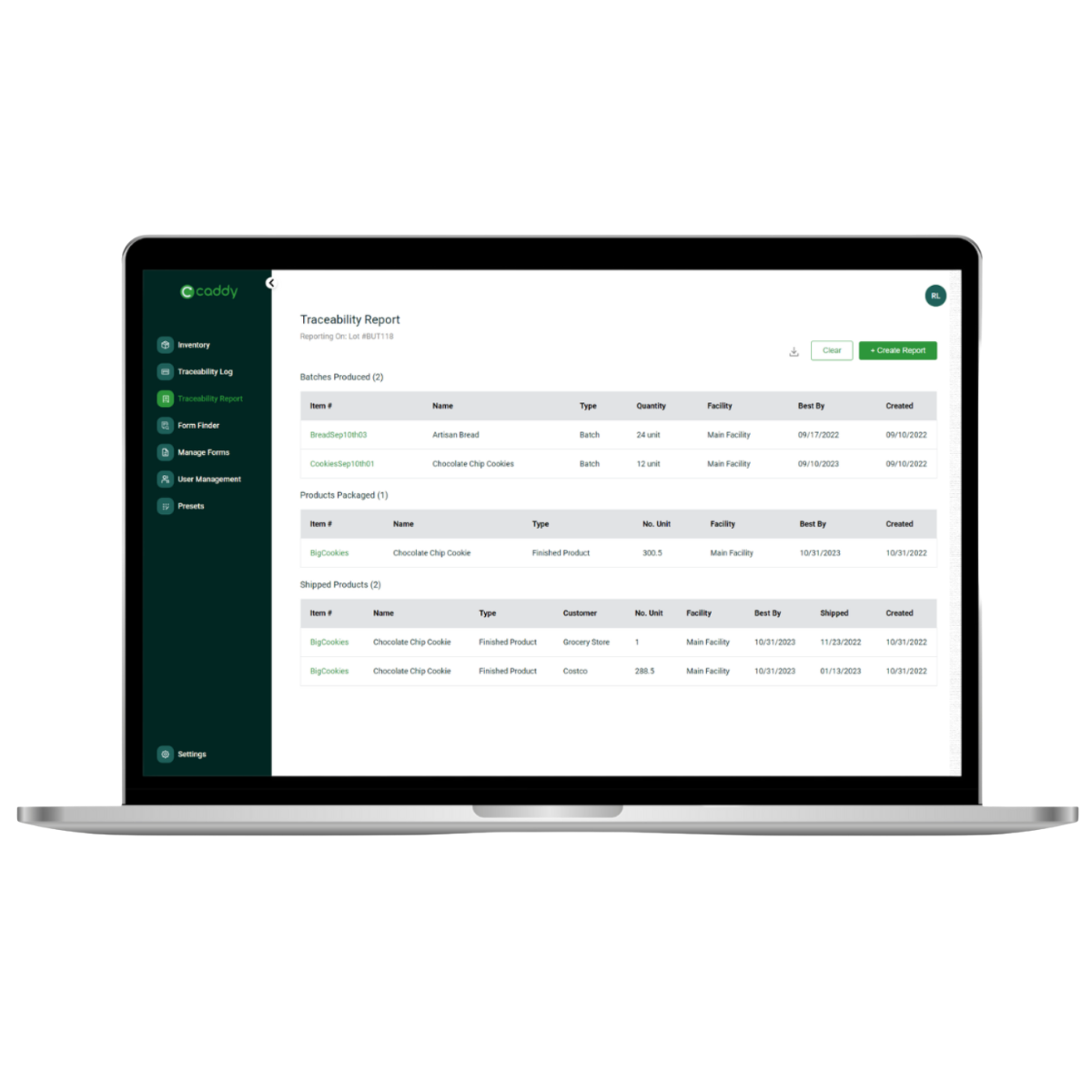
In Caddy, you pick the lot, trace it backward and forward, and export the report.
How Caddy covers SFCR traceability
Receiving: record the supplier, product, quantity, date and supplier lot code — or capture the lot code with your device’s camera.
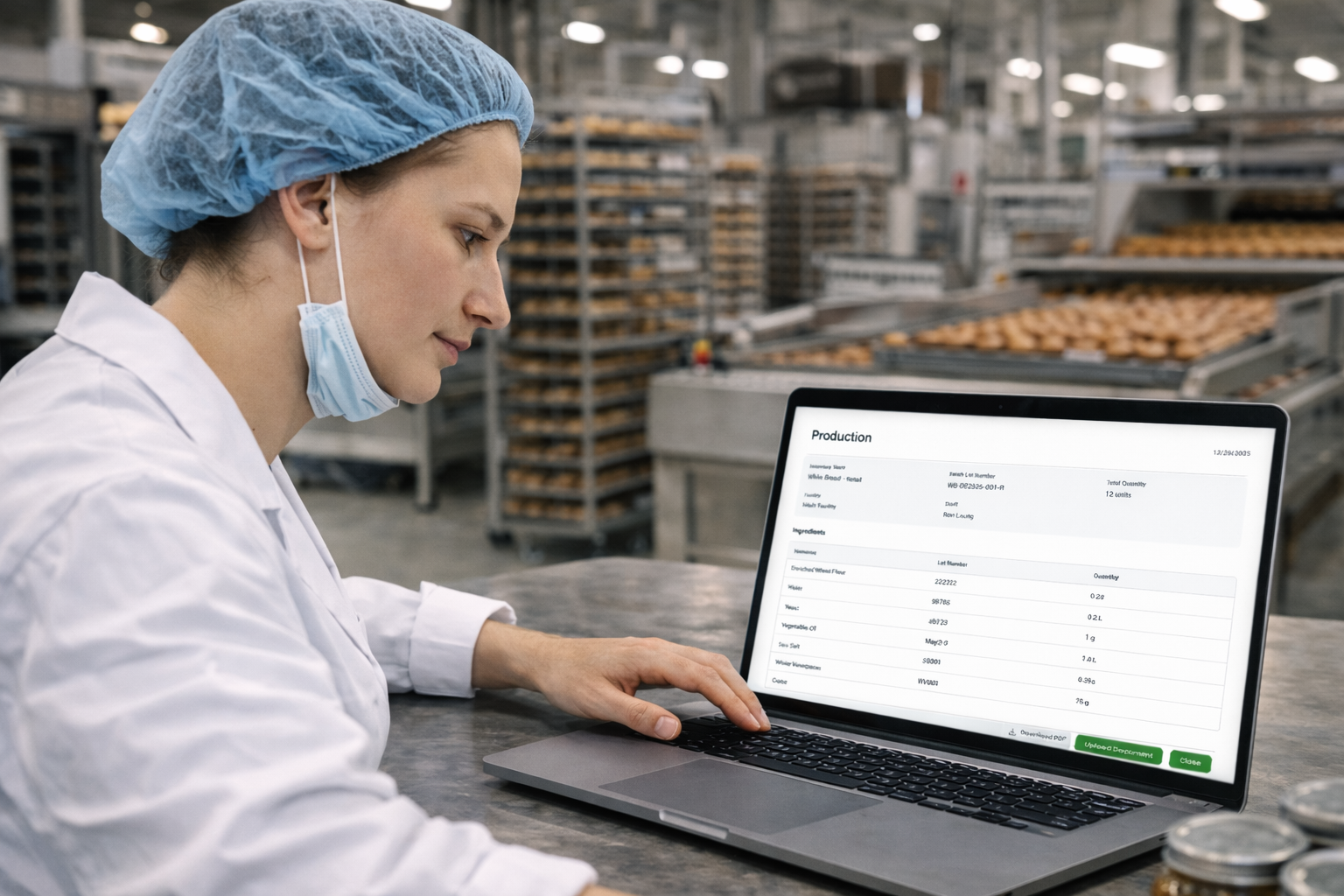
Production: every batch links the lots it consumed and gets its own lot code from your template, ready for the label.
Shipping: every order records which lots went to which customer, and when.
Trace and export: start from any lot, trace one step back and one step forward, and export the report for CFIA or your mock recall.
What Caddy doesn’t do: licensing, your preventive control plan, or labelling review. Our SFCR compliance guide covers where software stops.
Exporting to the US? SFCR vs FSMA 204
SFCR records don’t automatically meet FSMA 204. If you ship Food Traceability List foods to the US, you need both.
Foods covered: SFCR covers all foods traded between provinces or across the border. FSMA 204 covers foods on the Food Traceability List.
What you record: SFCR asks for one step back and one step forward. FSMA 204 asks for Key Data Elements at each Critical Tracking Event.
Lot codes: FSMA 204 says when a traceability lot code is assigned — at initial packing, first receiving from a fishing vessel, or transformation. SFCR doesn’t.
Format on request: SFCR wants a single plain-text file. FSMA 204 wants an electronic sortable spreadsheet.
Mock recall: SFCR requires one every 12 months. FSMA 204 doesn’t.
Same in both: two-year retention and records within 24 hours.
See FSMA 204 requirements for the US side.
Built for teams of 2 to 50
You don’t have a QA department. You have a production lead, a clipboard, and you.
Caddy is built for owner-led Canadian food manufacturers who make their own product and don’t run an ERP. Most teams are live in about 45 days.
“I had filing cabinets for filing cabinets… I just thought there had to be a better way.”
— John Diaz, General Manager, T.E. Neesby
SFCR traceability FAQs
What are the SFCR traceability requirements?
Record each food’s common name, lot code, supplier and date received (one step back) and customer and date sold (one step forward), keep it for two years, and give it to CFIA within 24 hours of a request.
Do small food businesses need SFCR traceability?
Yes, if you hold a licence or send food across provincial or national borders. There’s no sales threshold for traceability.
How often do I need to run a mock recall under SFCR?
Licence holders must run a recall simulation at least once every 12 months and keep the record for two years.
What format does CFIA want traceability records in?
Electronic records must be in a single plain-text file that commonly available software can open. A CSV export works.
Does SFCR traceability cover FSMA 204?
No. If you export Food Traceability List foods to the US, FSMA 204 asks for more detail. Caddy records both.
Keep reading
Lot traceability in Caddy — how tracing works day to day.
FSMA 204 for small food manufacturers — if you sell into the US.
How to create traceability lot codes — a practical guide.
.
Mock recall coming up? Let’s sanity-check fit.
We’ll tell you quickly whether Caddy makes sense for your operations — and just as clearly if it doesn’t.