
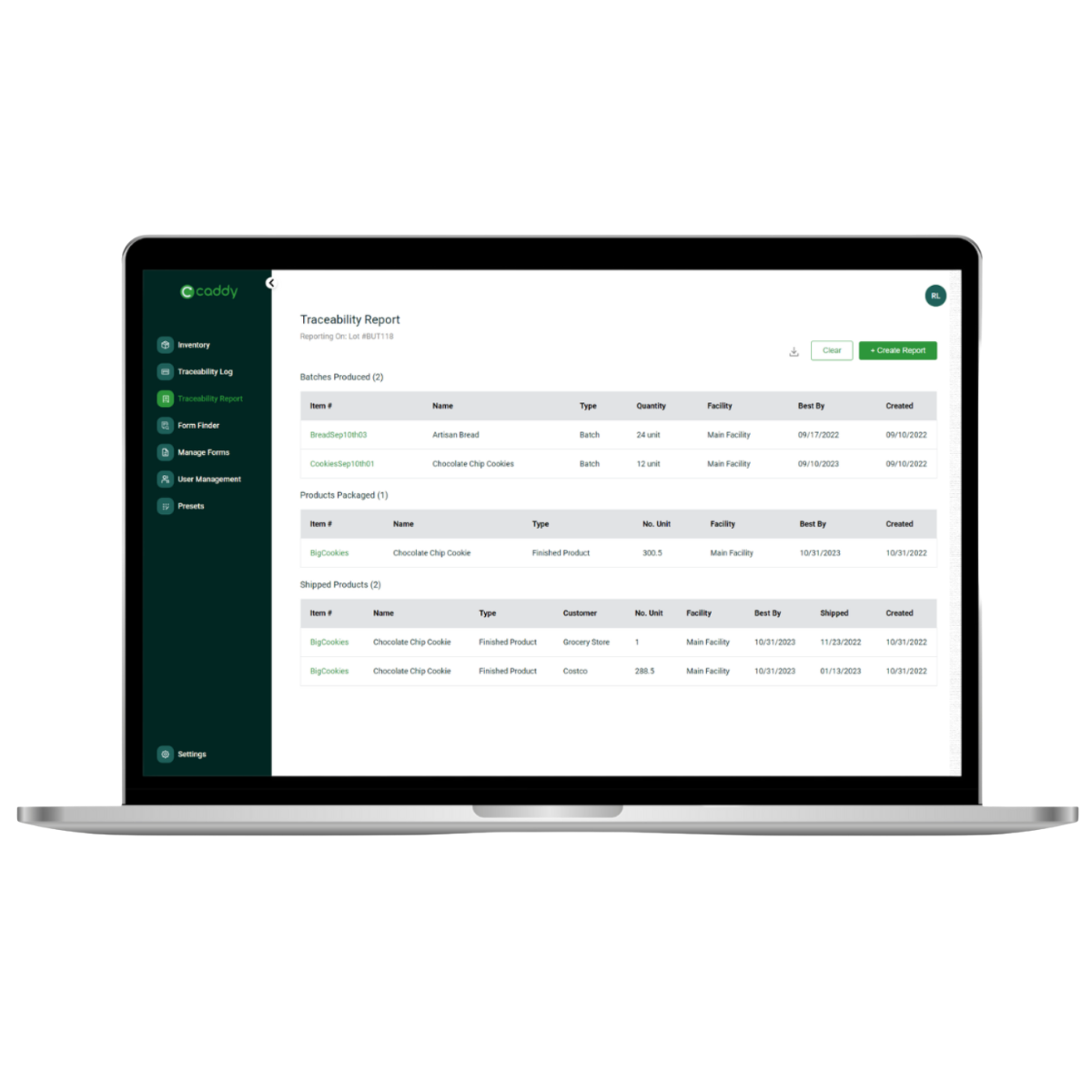
FSMA 204 Traceability for Small Food Manufacturers
Record the Key Data Elements FDA asks for as your team works — then hand over a sortable spreadsheet in minutes, not days.
Where FSMA 204 stands

The FDA Food Traceability Rule (FSMA Section 204) has been final since November 2022.
Congress has barred FDA from enforcing it before July 20, 2028, and FDA is using the time to publish guidance.
That sounds like a long runway. It isn’t, if your receiving logs, batch sheets and shipping records are still on paper.
Getting lot codes, Key Data Elements and a traceability plan in place takes months of habit change on the floor — not a weekend of data entry.
Canadian manufacturers: the rule also applies to foreign facilities that make Food Traceability List foods for the US market.
Does FSMA 204 apply to you?
It applies if you manufacture, process, pack or hold a food on FDA’s Food Traceability List (FTL) — or a food with an FTL ingredient that stays in the form it’s listed in, like fresh herbs or a soft cheese.
Foods on the list include:
Soft, semi-soft and other non-hard cheeses
Shell eggs and nut butters
Fresh cucumbers, herbs, leafy greens, melons, peppers, sprouts, tomatoes and tropical tree fruits
Fresh-cut fruits and vegetables
Finfish, smoked finfish, crustaceans and bivalve molluscan shellfish
Refrigerated ready-to-eat deli salads
There’s no small-manufacturer exemption. If you have $1M or less in annual food sales, you don’t have to produce the electronic sortable spreadsheet. Every other requirement still applies.
A kill step can exempt a food — but only if you keep receiving records and a record of applying the kill step.
What you have to record
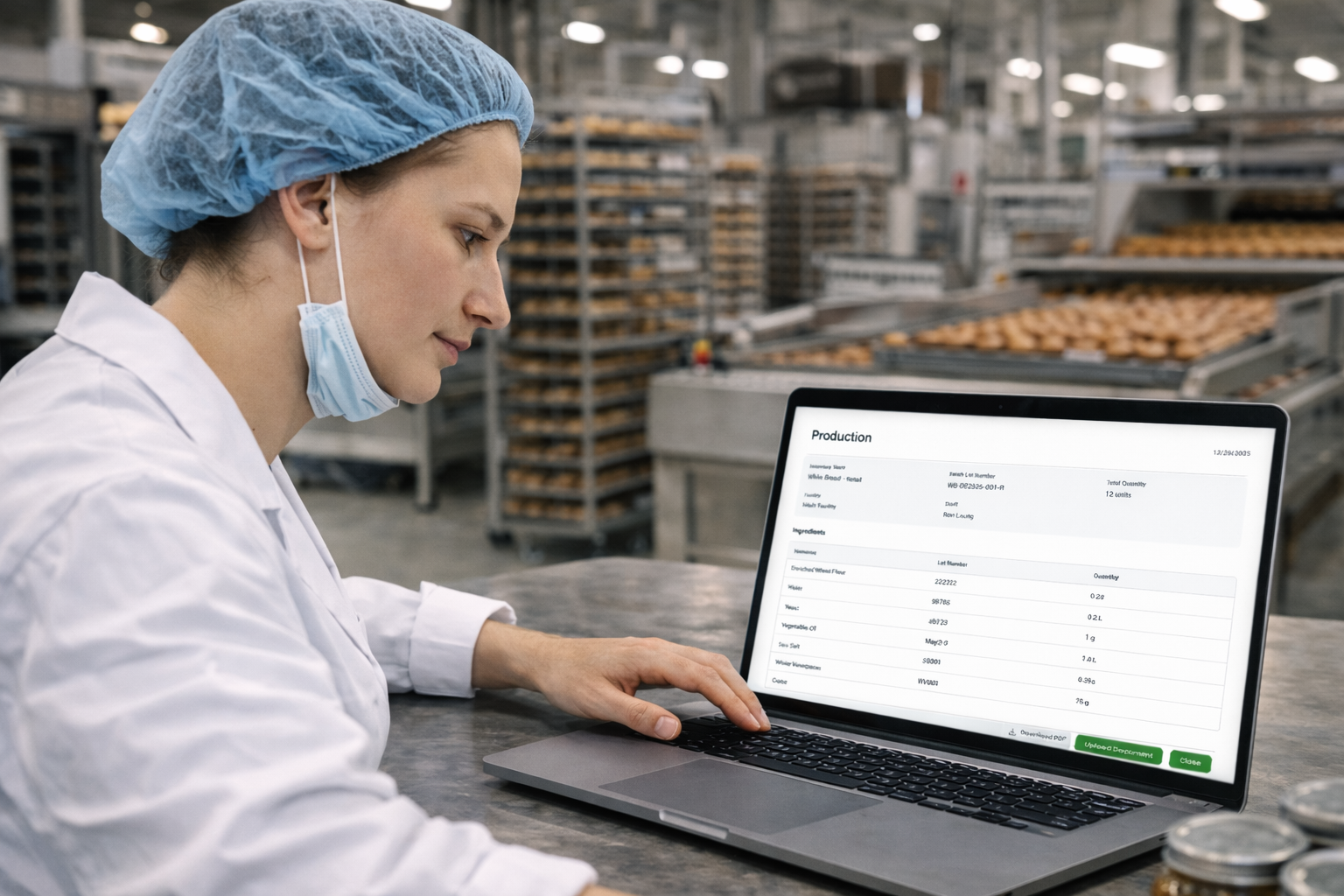
FSMA 204 is built around Critical Tracking Events (CTEs) and the Key Data Elements (KDEs) you record at each one. For most manufacturers, three events matter:
Receiving: the traceability lot code (TLC), quantity and unit, product description, where it came from, where you received it, the date, the TLC source and the reference document.
Transformation: every input lot you used, plus the new lot code, quantity, description and date for what you made.
Shipping: the TLC, quantity, product description, who you shipped to, where you shipped from, the date, the TLC source and the reference document.
You assign a new traceability lot code when you transform a food — not when you ship it. You also need a written traceability plan: how you keep records, identify FTL foods and assign lot codes, plus a point of contact. Keep records for two years.
How Caddy captures FSMA 204 records
Caddy records traceability data the moment work happens, through simple digital forms on the floor.
Receiving: log the supplier, product, quantity and supplier lot code — or capture the lot code with your device’s camera.
Production: each batch links every input lot it consumed and gets its own lot code from your template.
Shipping: each order records the lots, quantities and customer that left the building.
Trace: start from any lot and trace backward and forward in one click.
Export: download the trace for your customer, auditor or FDA.
The 24-hour request
When FDA asks, you have 24 hours to produce your traceability records.
During an outbreak or recall, that includes an electronic sortable spreadsheet.
On paper, that’s a day of pulling binders and retyping lot codes. In Caddy, it’s a trace and an export.
Built for teams of 2 to 50
You don’t have a QA department or an ERP. You have a production lead, a clipboard, and you.
Caddy replaces the paper and spreadsheets. Most teams are live in about 45 days.
“I had filing cabinets for filing cabinets… I just thought there had to be a better way.”
— John Diaz, General Manager, T.E. Neesby
FSMA 204 FAQs
When do I have to comply with FSMA 204?
FDA won’t enforce the Food Traceability Rule before July 20, 2028. The rule itself has been final since 2022, so retailers and customers may ask for FSMA 204-style records sooner.
Is there a small business exemption for food manufacturers?
No. Manufacturers with $1M or less in annual food sales don’t have to provide the electronic sortable spreadsheet, but every other requirement applies.
Does FSMA 204 apply to Canadian food manufacturers?
Yes, if you make or handle Food Traceability List foods sold in the US. You’ll need both FSMA 204 records and SFCR traceability.
What is a traceability lot code?
The lot code assigned when a food is initially packed, first received from a fishing vessel, or transformed. It travels with the food through the supply chain, and you record where it was assigned (the traceability lot code source).
Does Caddy make me FSMA 204 compliant?
Caddy records the lot-level traceability data FSMA 204 is built on and exports it on demand. Compliance also depends on your traceability plan and procedures. We’ll walk through what applies to you on a fit call.
Selling in Canada too?
SFCR and FSMA 204 overlap, but one doesn’t cover the other.
If you sell across provinces or export, see SFCR traceability requirements.
For how tracing works day to day, see lot traceability in Caddy.
Want the full rule? Read our guides to FSMA Rule 204 requirements and the FSMA 204 Food Traceability List.
.
FSMA 204 on your list? Let’s sanity-check fit.
We’ll tell you quickly whether Caddy makes sense for your operations — and just as clearly if it doesn’t.