
Lot Traceability
Built for owner-led food manufacturers who need answers in seconds—not spreadsheets in a panic.
The problem with manual traceability

Manual traceability “works” — until something goes wrong.
Records live in different places.
Lots get copied wrong.
And finding the answer takes hours.
By the time you compile the trail, it’s already late.
That delay increases risk in recalls, audits, and retail relationships.
How Caddy traceability works
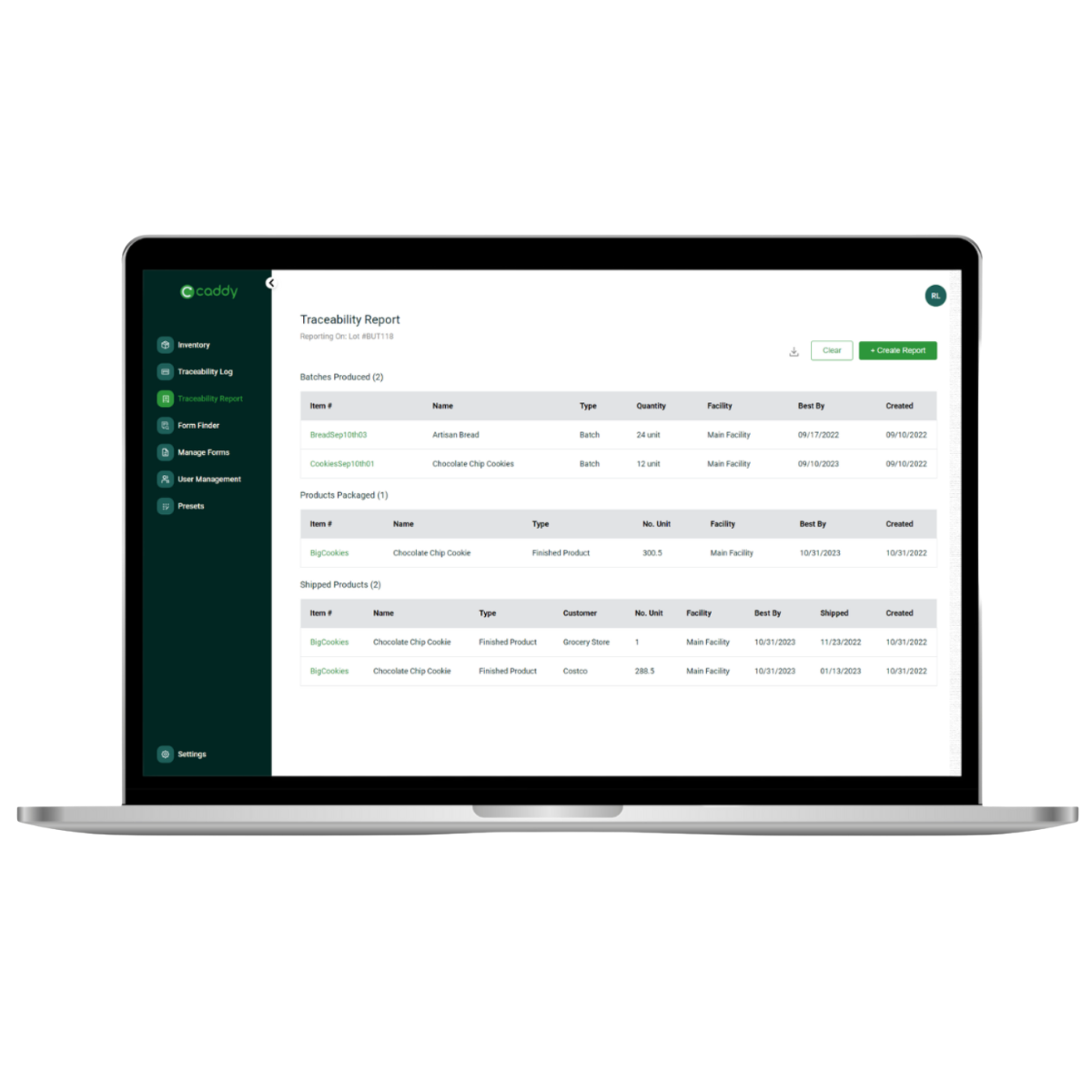
Caddy links your lots across receiving, production, packaging, and shipping—so you can trace in seconds.
Pick a lot as your starting point.
Choose what you’re tracing (ingredients, packaging, batches, finished goods).
Trace backward and forward in one click.
Export the report.
Attach supporting docs.
Move on.
What you can do with traceability
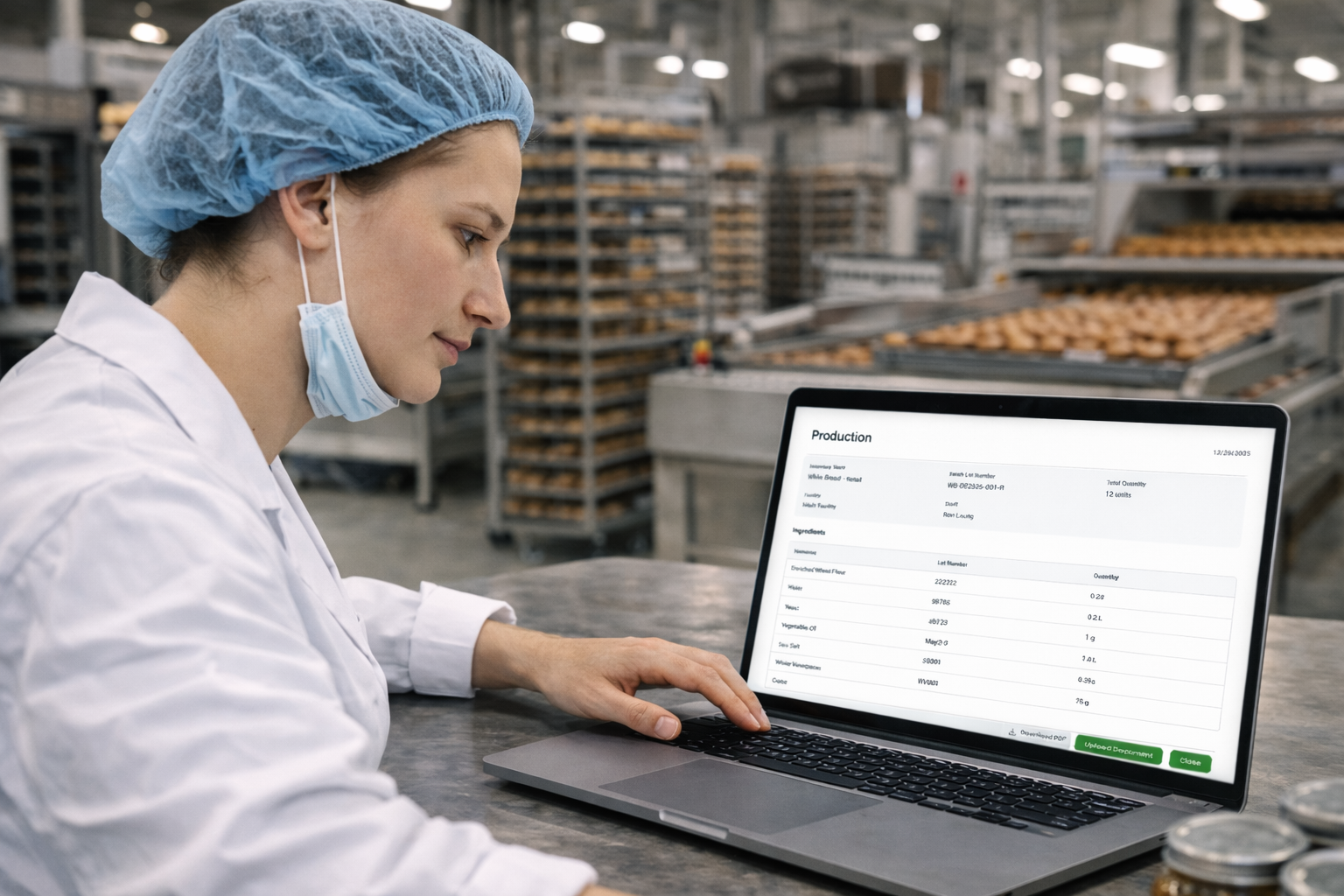
Run backward and forward trace reports instantly
Start from a lot code, batch, ingredient, packaging, or finished good
See where a lot came from—and where it went
Download/export reports for customers, auditors, or internal review
Attach COAs, photos, and documents to the trace trail
Reduce dependence on “who remembers where that paper or spreadsheet is”
Built for teams of 2 to 50
You don’t have a QA department. You have a production lead, a clipboard, and you.
Caddy is built for owner-led food manufacturers who make their own product, run one or a few facilities, and don’t have an ERP.
If a retailer, an auditor, or a certification body is asking for traceability, this is where you start.
What traceability has to prove
In Canada (SFCR): trace one step back — each ingredient, who supplied it, and when you received it — and one step forward — who you sold to, and when. Keep those records for two years.
In the US (FSMA 204): if you make or handle foods on the FDA Food Traceability List, you record Key Data Elements at each Critical Tracking Event and give FDA a sortable spreadsheet within 24 hours of a request. FDA won’t enforce it before July 20, 2028.
SFCR compliance doesn’t automatically meet FSMA 204. If you sell into the US, you need both.
Caddy captures these records as your team works — not after the fact.
Run a mock recall in minutes, not a day
Most auditors ask for a mock recall. On paper, that means pulling receiving logs, batch sheets and invoices — and hoping the lot codes match.
In Caddy, you pick the lot, run the trace backward and forward, and export the report.
Production lot numbers are generated automatically from your lot code template. Receiving lots can be entered or captured with your device’s camera.
“I had filing cabinets for filing cabinets… I just thought there had to be a better way.”
— John Diaz, General Manager, T.E. Neesby
Lot traceability FAQs
Do I need an ERP to get lot traceability?
No. Caddy is built for manufacturers without an ERP and replaces the paper and spreadsheets you use today.
Where can I start a trace?
From any lot code, batch, ingredient, packaging item or finished good — backward and forward in one click.
Can I share trace reports with customers or auditors?
Yes. Export the report and attach supporting documents like COAs and photos to the trace trail.
Does Caddy cover FSMA 204?
Caddy records lot-level traceability data across receiving, production, packaging and shipping. Whether FSMA 204 applies to you depends on the foods you make — we’ll walk through it with you on a fit call.
Why traceability matters
Speed protects your brand.
When traceability is instant, you can act before a problem spreads.
You respond to audits faster.
You answer retailers with confidence.
You avoid all-hands fire drills.
.
Over manual traceability? Let’s sanity-check fit.
We’ll tell you quickly whether Caddy makes sense for your operations — and just as clearly if it doesn’t.